What Gas Town Is Really Building

- Published on
What Gas Town Is Really Building
Part of the Agent Engineering Playbook.
Steve Yegge's Welcome to Gas Town is entertaining on purpose. The repo is full of memorable names. The whole thing is dressed like a wasteland opera. It would be easy to read it as style, frontier theater, or one more attempt to turn "lots of Claude Code windows" into a philosophy.
That would miss what is actually interesting.
Gas Town is trying to solve a real systems problem: once you regularly run many coding agents at once, session-based work becomes too fragile. Context gets lost. Humans become the merge queue. Handoffs live in transcripts. Agents forget what they were doing when the process dies or the window resets. Past a certain scale, the human is not writing code anymore. The human is shepherding volatile agent state.
Gas Town's answer is to push work out of ephemeral sessions and into persistent structures.
The Core Idea Is Persistence, Not Swarms
The official Gas Town repository calls it a multi-agent workspace manager with persistent work tracking. That phrase matters more than all the character names.
The repo is explicit about the problem it thinks it solves:
- agents lose context on restart
- manual coordination becomes painful
- hand-managed multi-agent work gets chaotic
- work state disappears if it lives only in agent memory
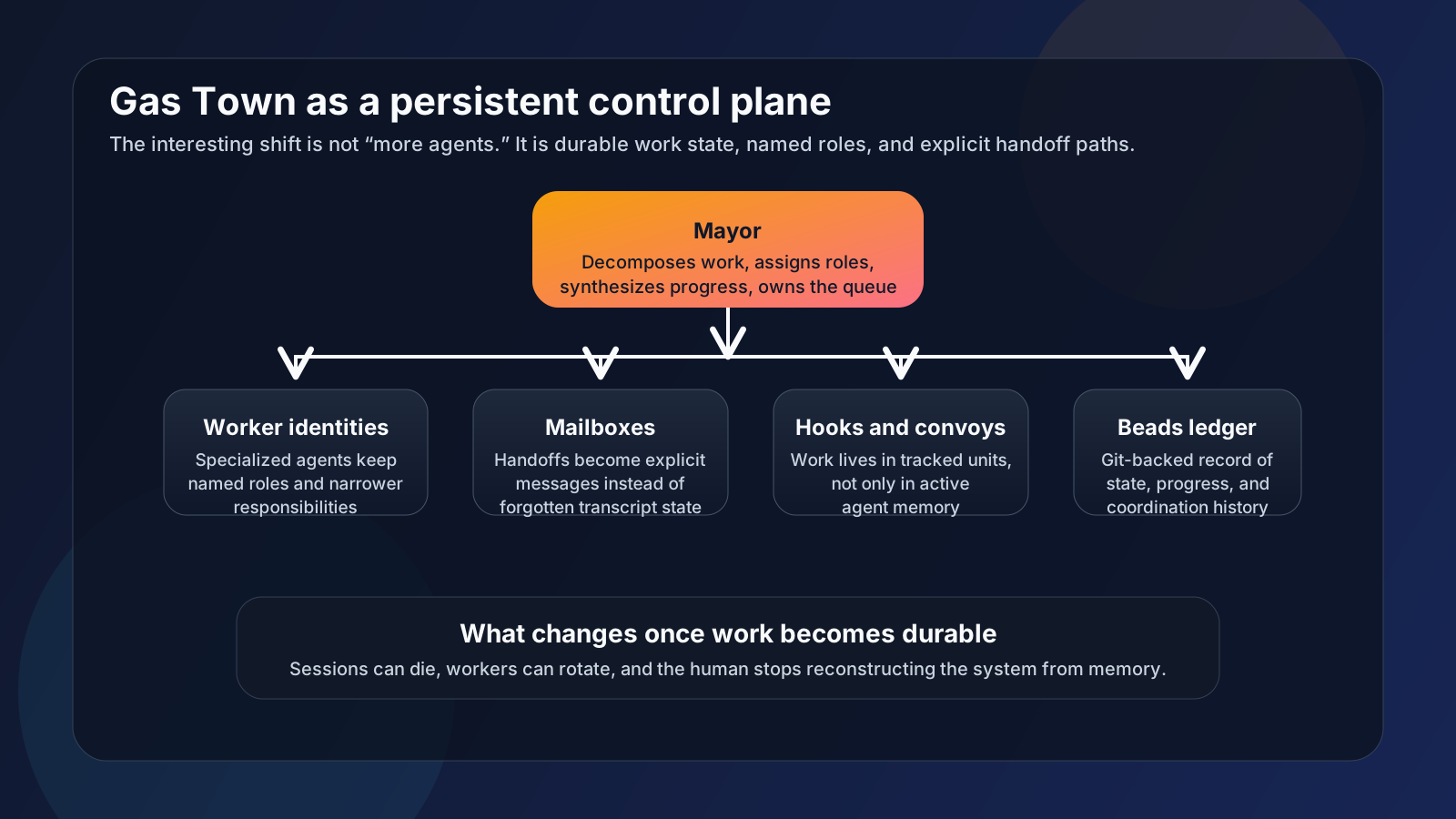
Gas Town answers with persistent work units, mailboxes, identities, hooks, and a Git-backed ledger through Beads. That is the real move. Not "more agents." Durable work state.
Once you see that, the system becomes much easier to reason about.
Why the Mayor Matters
Yegge's repo places the Mayor at the center as the main coordinating agent. In the essay, he describes the Mayor as the main agent you talk to most of the time, the concierge and chief-of-staff. That is not just flavor. It is a statement about control planes.
Most multi-agent setups have an implicit coordinator anyway. Sometimes it is the human. Sometimes it is an invisible wrapper script. Gas Town makes that coordinator explicit and gives it an identity, a role, and persistent context.
That is good architecture.
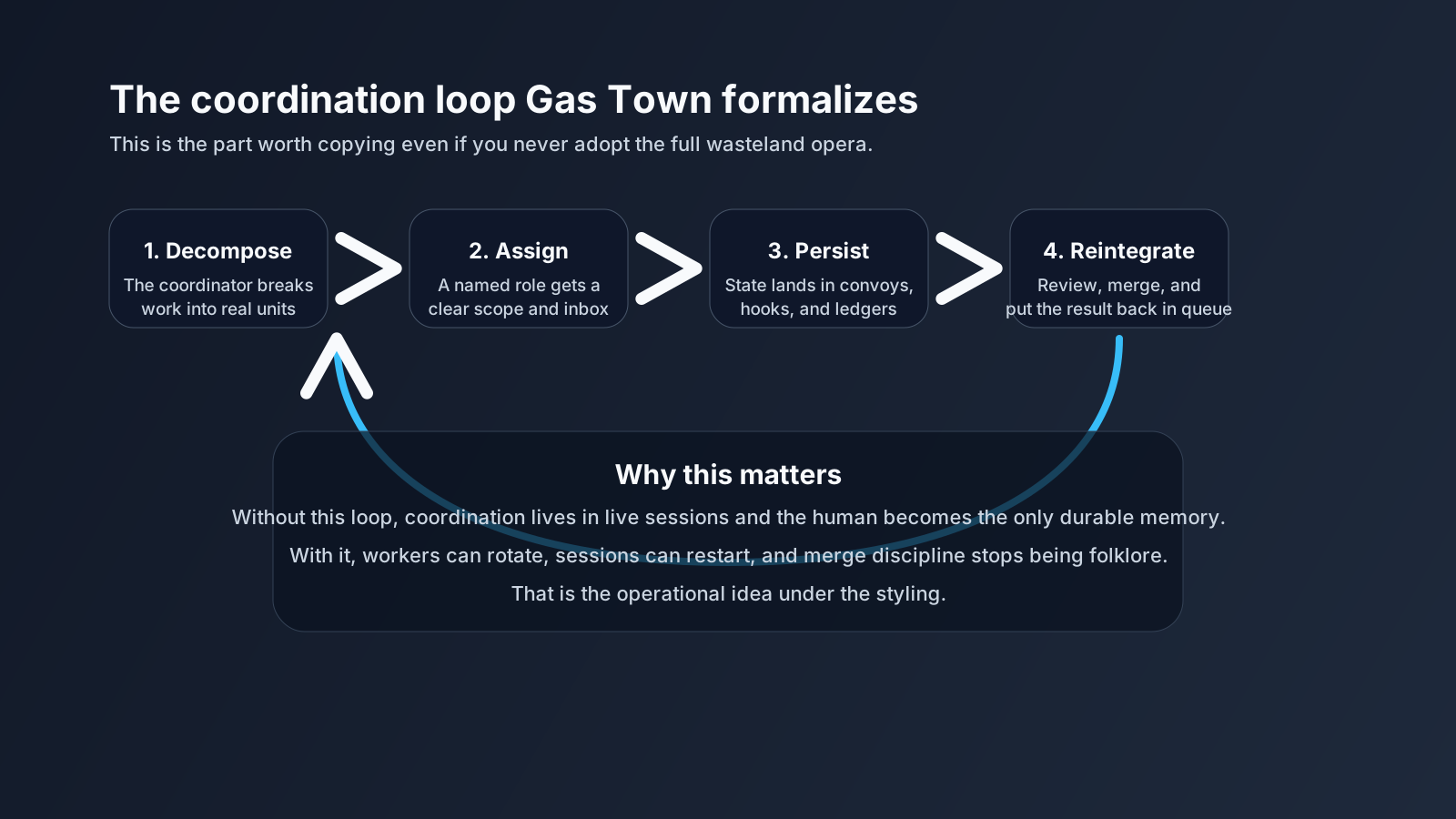
If you are going to orchestrate many workers, somebody needs to own decomposition, task assignment, and progress synthesis. The worst version of multi-agent work is when no one clearly owns those jobs and the human ends up rediscovering the state from ten terminals.
Hooks, Convoys, and the Real Work of Coordination
The Gas Town repo describes hooks as Git worktree-based persistent storage and convoys as the work tracking units that bundle issues and tasks. In other words, Gas Town is not merely opening extra agent sessions. It is trying to create a data plane for work.
That is the part I think more people should copy.
The system treats work items as first-class artifacts instead of incidental chat messages. It treats identity as something more durable than a currently open terminal. It treats orchestration as a sequence of assignments, patrols, checks, and handoffs rather than as a magical emergent property of "smart enough models."
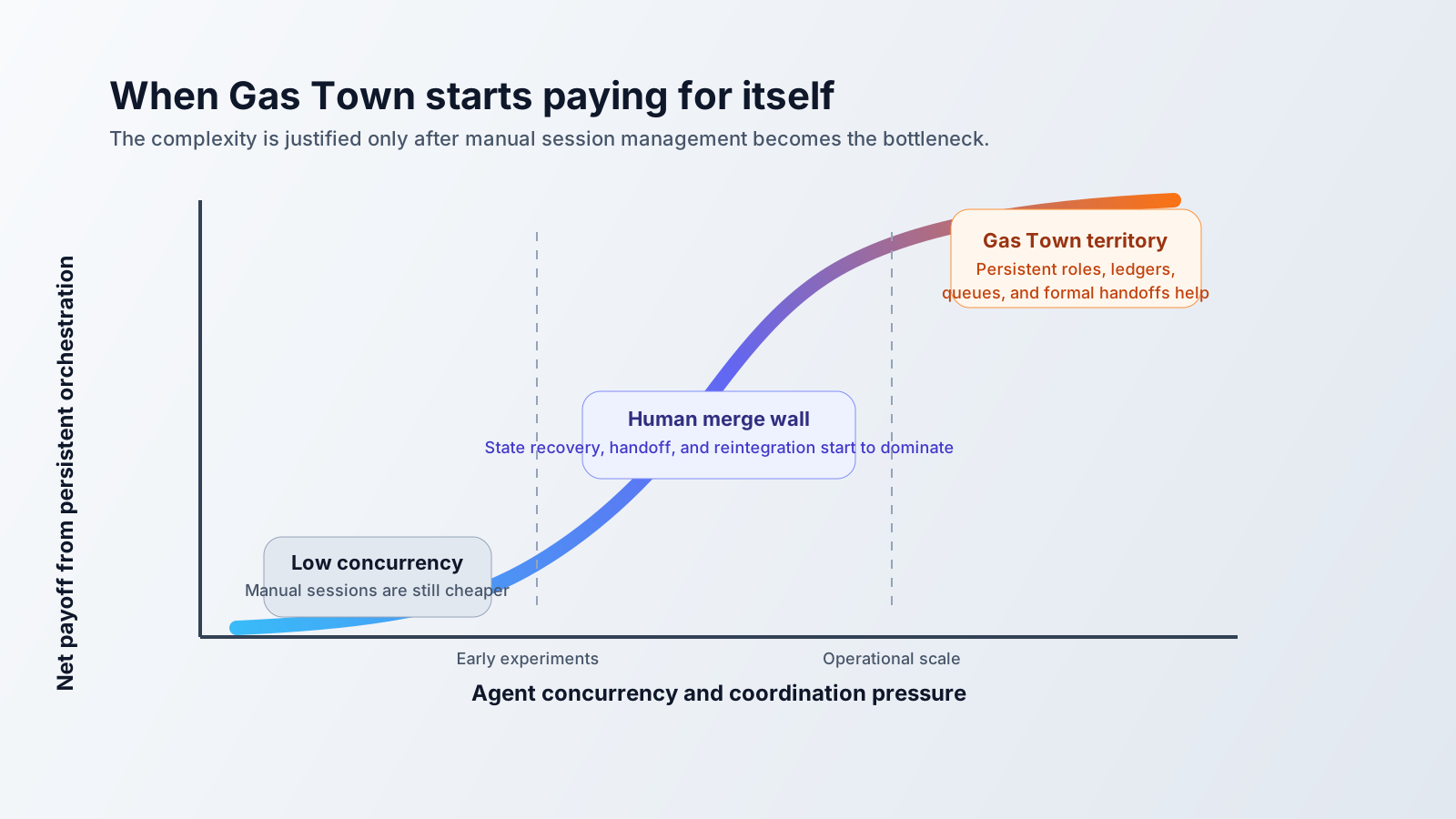
This is also why Gas Town can sound overbuilt to people who have not yet hit the problem it is solving. If you are running one agent, or even three with light coordination, it probably is overbuilt. Yegge says as much in the essay, bluntly. Gas Town is not aimed at beginners. It is aimed at people who are already deep into manual multi-agent operation and are hitting the human-coordination wall.
What to Borrow Before You Adopt the Whole Thing
You do not need Gas Town to learn from Gas Town.
There are at least four ideas worth stealing early.
First, work should outlive sessions. Put important state in tickets, files, ledgers, or structured mail, not only in the active chat thread.
Second, roles should be named and narrow. Gas Town's taxonomy is colorful, but beneath the styling is a serious point about focused responsibility. Coordinators, workers, reviewers, and watchers should not all be the same blurred agent persona.
Third, merge discipline is not optional. Yegge spends real time on the merge queue problem because parallel work collides. Any serious multi-agent system eventually needs a strategy for serialization and re-integration.
Fourth, handoff needs ceremony. Gas Town has a specific handoff command and makes session recycling part of the operating model. That is healthy. Handoffs should be explicit because that is where systems usually drop context on the floor.
Where I Would Be Careful
Gas Town is impressive, but it is not a universal prescription.
It is operationally heavy. It assumes a high appetite for concurrent agent work. It assumes comfort with tmux, ledgers, workflow machinery, and a nontrivial amount of process. It also assumes you are ready to spend real money on agent throughput. Yegge says this out loud in the essay, sometimes jokingly and sometimes not.
So the right question is not "Should every team use Gas Town?" The right question is "At what scale of agent concurrency do its ideas start paying for their own complexity?"
For most teams today, the answer is: later than they think.
What Gas Town Really Represents
Gas Town is not just a tool. It is a prototype for a new working style in which sessions are disposable, roles are persistent, and orchestration is a real engineering discipline rather than an ad hoc habit.
That is why it matters.
Even if Gas Town itself changes drastically, the underlying ideas are likely to stay. Agent identity will become more durable. Work state will move out of transcripts. Merge and handoff systems will get more formal. The biggest multi-agent tools will look less like chat clients and more like operating environments.
Gas Town feels early because it is early. But it is early in an interesting direction.